Dog TPLO Surgery in Surrey: Fixed-Price Cruciate Surgery at The Vet Station
If your dog is limping on a back leg, struggling with stairs, or suddenly refusing to jump into the car, it could be more than a simple sprain.
One of the most common causes of hind leg lameness in dogs is a cranial cruciate ligament injury, often called a CCL tear. In many cases, TPLO surgery is one of the most effective ways to stabilise the knee and help dogs return to a more comfortable, active life.
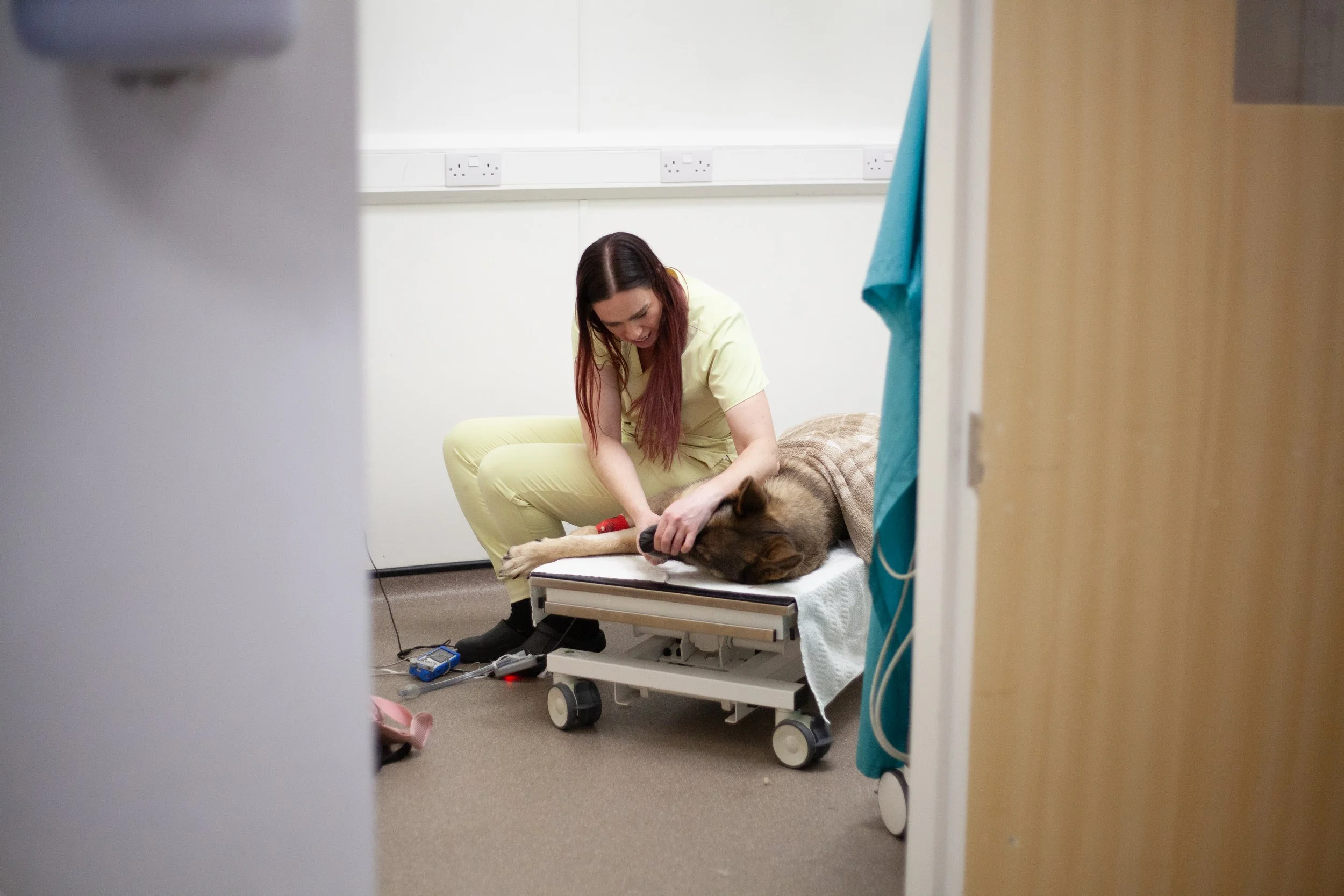
What is TPLO surgery?
TPLO stands for Tibial Plateau Levelling Osteotomy. It is a type of dog knee surgery used to treat a damaged or torn cranial cruciate ligament.
The cranial cruciate ligament helps stabilise your dog’s knee. When it tears, the knee becomes unstable, which can cause pain, inflammation and difficulty walking.
TPLO surgery works by reducing the steep plateau angle in the knee, which is the shin bone. This helps stabilise the knee so your dog can move more comfortably without relying on the damaged ligament in the same way.
Signs your dog may have a cruciate ligament injury
A cruciate ligament injury can happen suddenly during running or play, or it can develop gradually over time.
You should book a vet appointment if your dog is showing signs such as:
Limping on a back leg
Holding one back leg up
Sudden pain after exercise
Difficulty getting up after resting
Struggling with stairs
Reluctance to jump into the car or onto furniture
Sitting with one leg sticking out to the side
A limp that improves with rest but keeps coming back
Some dogs will suddenly become very lame. Others may only look stiff or uncomfortable at first. Either way, a persistent limp should always be checked by a vet.
What does TPLO surgery involve?
Before surgery, your dog will usually need a full examination and X-rays. This helps confirm the problem, assess the knee and plan the surgery.
During TPLO surgery, the veterinary surgeon makes a carefully planned cut in the top of the tibia. The bone is then rotated to change the angle of the knee joint and secured in place using a surgical plate and screws.
The aim is to reduce abnormal knee movement, improve stability, and help your dog walk more comfortably.
TPLO surgery is a major orthopaedic procedure, but it is commonly performed in dogs with cruciate ligament injuries and can significantly improve their comfort and mobility.
How much does TPLO surgery cost?
At The Vet Station, TPLO surgery is available at a fixed price of £3,000, including X-rays.
This gives owners clear, upfront pricing before treatment goes ahead.
Our fixed price TPLO surgery includes X-rays to help assess, plan and review your dog’s cruciate ligament treatment. During your consultation, our team will explain what is included, what recovery involves and whether TPLO surgery is the right option for your dog.
How long does TPLO recovery take?
Most dogs recover gradually over several months after TPLO surgery.
Every dog is different, but recovery often follows this general timeline:
First 2 weeks
Strict rest, short toilet breaks on a lead, wound care and medication as prescribed. Running, jumping, stairs and rough play should be avoided.
2 to 6 weeks
Gentle, controlled lead walks may slowly begin, depending on your vet’s advice. Your dog may feel brighter, but activity still needs to be carefully managed.
8 to 12 weeks
Many dogs are walking more comfortably by this stage. Your vet may recommend follow-up checks or X-rays to assess healing.
3 to 6 months
Exercise is gradually increased as your dog heals. Many dogs return to normal or near-normal activity by around six months, depending on their progress.
Following the recovery plan is one of the most important parts of a successful TPLO outcome.
Can my dog walk after TPLO surgery?
Yes, but only in a controlled way.
Your dog will usually be allowed outside for short toilet breaks on a lead. They should not run, jump, chase toys, climb stairs, or play roughly until your vet says it is safe.
It is also helpful to avoid slippery floors during recovery. Rugs, mats, or non-slip runners can make your home safer while your dog heals.
What happens if my dog does too much too soon?
Too much activity after TPLO surgery can delay healing or cause complications.
Running, jumping, slipping, or playing too early may increase pain, affect the surgical site, or interfere with recovery. Even if your dog seems keen to do more, it is important to follow your vet’s instructions until they are ready.
What happens if my dog does too much too soon?
Too much activity after TPLO surgery can delay healing or cause complications.
Running, jumping, slipping, or playing too early may increase pain, affect the surgical site, or interfere with recovery. Even if your dog seems keen to do more, it is important to follow your vet’s instructions until they are ready.
TPLO surgery at The Vet Station in East Molesey
At The Vet Station, we support dogs with cruciate ligament injuries from diagnosis through to recovery.
We are based in East Molesey, Surrey, and welcome clients from nearby areas including Molesey, Hampton Court, Thames Ditton, Esher, Walton-on-Thames, Kingston and surrounding Surrey communities.
We can help with:
Assessment of dog limping and hind leg lameness
Diagnosis of suspected cruciate ligament injuries
Dog knee surgery advice
TPLO surgery for dogs
Recovery guidance after TPLO surgery
Ongoing support during healing
Worried about your dog’s limp?
If your dog is limping on a back leg, struggling with stairs, or has been diagnosed with a cruciate ligament injury, we can help.
Book an appointment with The Vet Station in East Molesey today to discuss fixed price TPLO surgery, cruciate ligament treatment,1 and your dog’s recovery options.